Reading & Literacy
At Plymouth High School for Girls, we take great pride in cultivating a word‑rich learning environment in which students are continuously encouraged to broaden and refine their vocabulary.
This commitment extends far beyond English; every subject actively promotes the development of precise, subject‑specific language. We firmly believe that every member of staff is a teacher of literacy, and through carefully structured schemes of learning, they introduce and reinforce the academic vocabulary that enables students to articulate ideas with clarity and confidence.
A strong and sophisticated vocabulary is fundamental to a student’s ability to access the curriculum fully and to thrive both in school and in the wider world.
To support this development further, parents and carers can play a vital role in nurturing vocabulary growth at home. Below are several effective strategies:
- Encourage students to record new or unfamiliar words as they read, noting both the definition and examples of the word in context. Regular use of this new vocabulary in their own writing helps to secure long-term understanding.
- Engage in thoughtful, wide‑ranging discussions at home, prompting students to express themselves in full, well‑constructed sentences.
- Gently challenge simple or limited language choices, and actively praise the use of more ambitious, precise, and expressive vocabulary during conversation.
- For further guidance, we recommend the EEF resource: 7 Top Tips to Support Reading at Home
"Read A Little More" - 2026 Year of Reading poem
In twenty‑twenty‑six, let’s open every door,
to stories, words and wonders, let’s choose to read some more.
It doesn’t need to be a novel, leather‑bound and grand;
a magazine, a leaflet, any page you hold in hand.
Read the guide that shows you how
to make the new machine go now;
Read the recipe you’ve saved,
or the map for roads unpaved.
Read to learn or read for fun,
read in shadows, read in the sun.
Read a joke that makes you grin,
read a fact and take it in.
Each word you meet expands your mind,
a spark, a seed, your thoughts refined.
Reading grows the world you know,
one quiet moment helps you grow.
So let’s all read a little more,
a paragraph, a page, or four.
In every book or guide, you’ll see
a stronger, wiser, brighter you,
the one you’re meant to be.”
How you can support your child with their reading
Thank you for your support in helping our young people to continually broaden and increase what they read. Anything parents and carers can do to promote reading at home and talk about literature will make a difference.
- Do you like the main character?
- How do you think it is going to end?
- What impression do you get of character x or y?
- Do you think they are likeable? Trustworthy? Suspicious? Etc.
- Which words of phrases make you think that?
- Does this book remind you of anything you’ve already read?
- If you were that character, what would you have done differently in that situation?
- Where is the book set? What does it look like in your head? Would you like to visit?
- Why do you think the author wrote this book?
- Would you have ended the book differently? Did it end the way you thought it would?
- Did the problem of the book’s plot get solved?
- If you could change one thing in the book, what would it be?
- Helpful questions to ask about what they are reading:
- Do you like the main character?
- How do you think it is going to end?
- What impression do you get of character x or y?
- Do you think they are likeable? Trustworthy? Suspicious? Etc.
- Which words or phrases make you think that?
- Does this book remind you of anything you’ve already read?
- If you were that character, what would you have done differently in that situation?
- Where is the book set? What does it look like in your head? Would you like to visit?
- Why do you think the author wrote this book?
- Would you have ended the book differently? Did it end the way you thought it would?
- Did the problem of the book’s plot get solved?
- If you could change one thing in the book, what would it be?
Extreme Reading Competition 2026
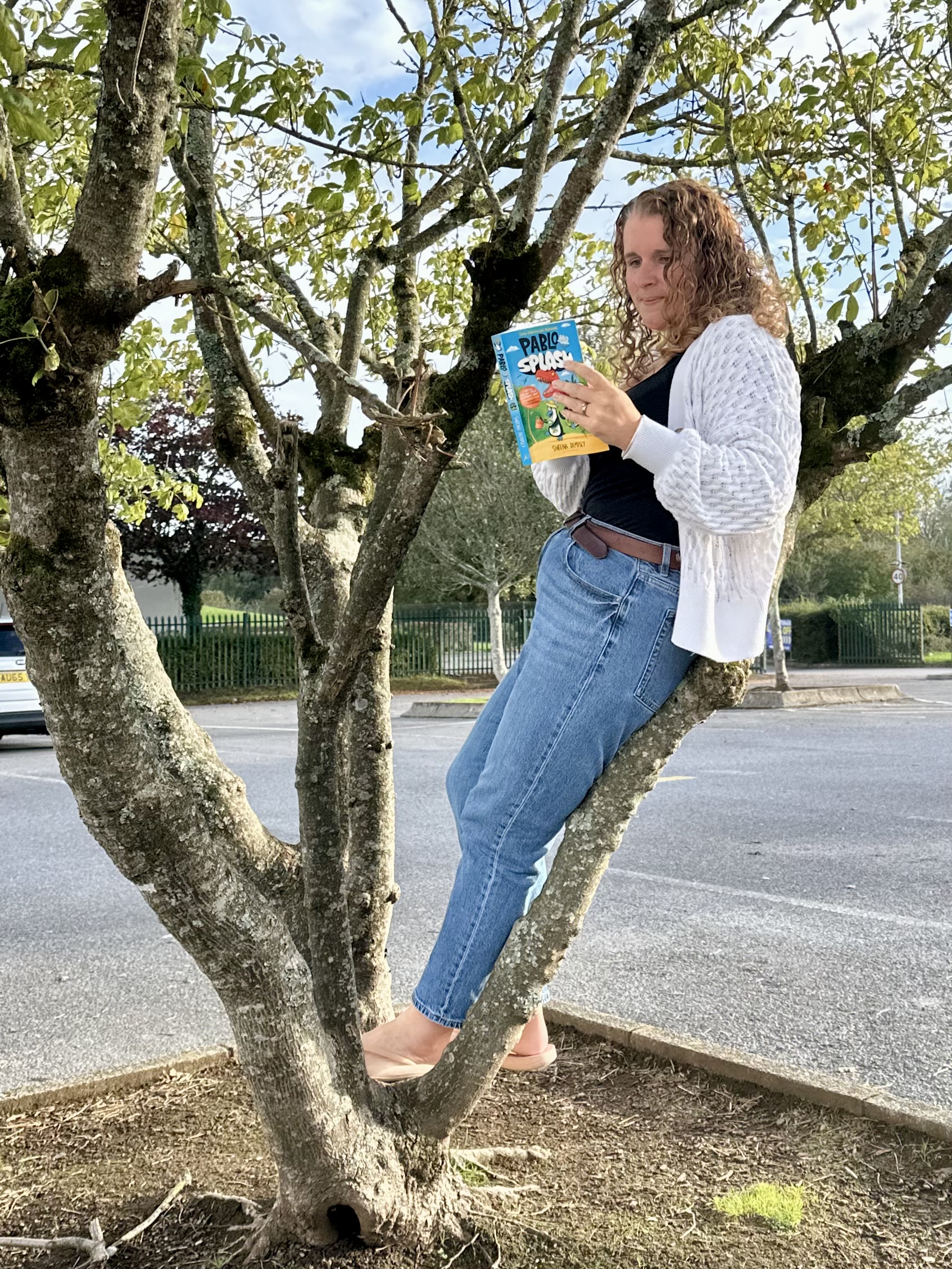
Do you recall during our Summer term that we asked students to take part in our extreme reading competition? We've had so many incredible entries so far! You can browse through the submissions below:
Student submissions
Misia Y (7K)
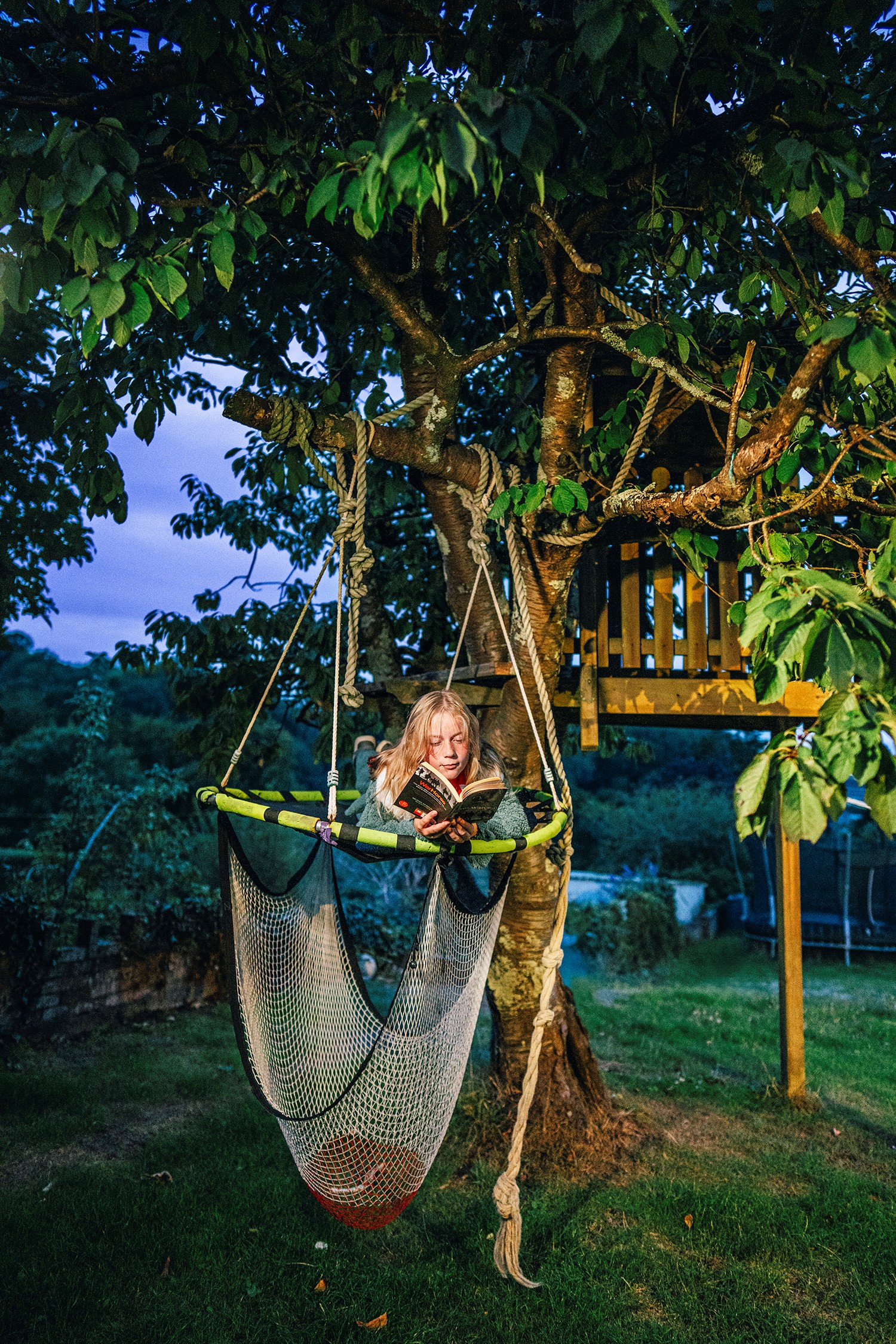
Eliza Q, 7T
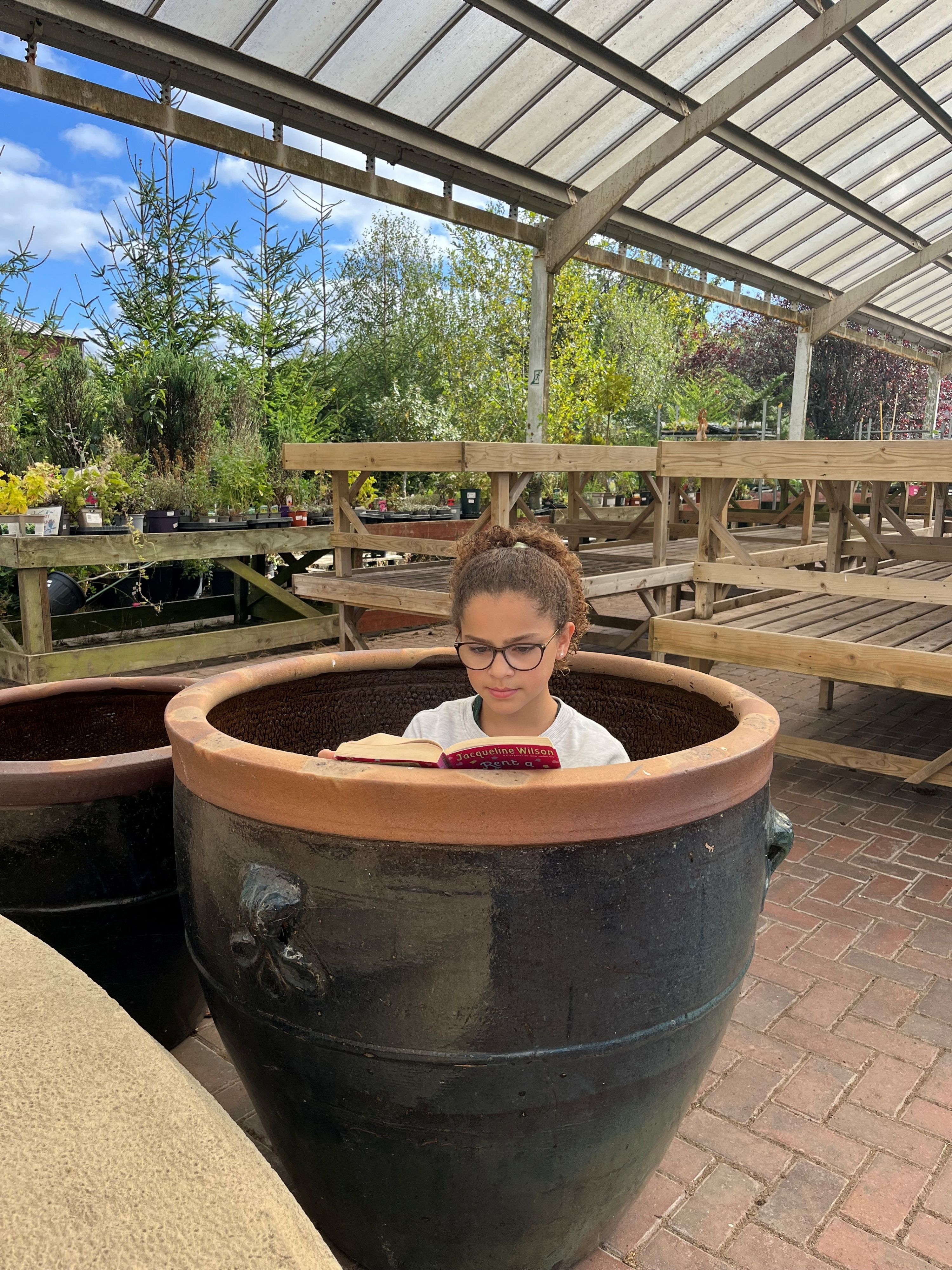
Hope W, 7K

Eleni B, 7A
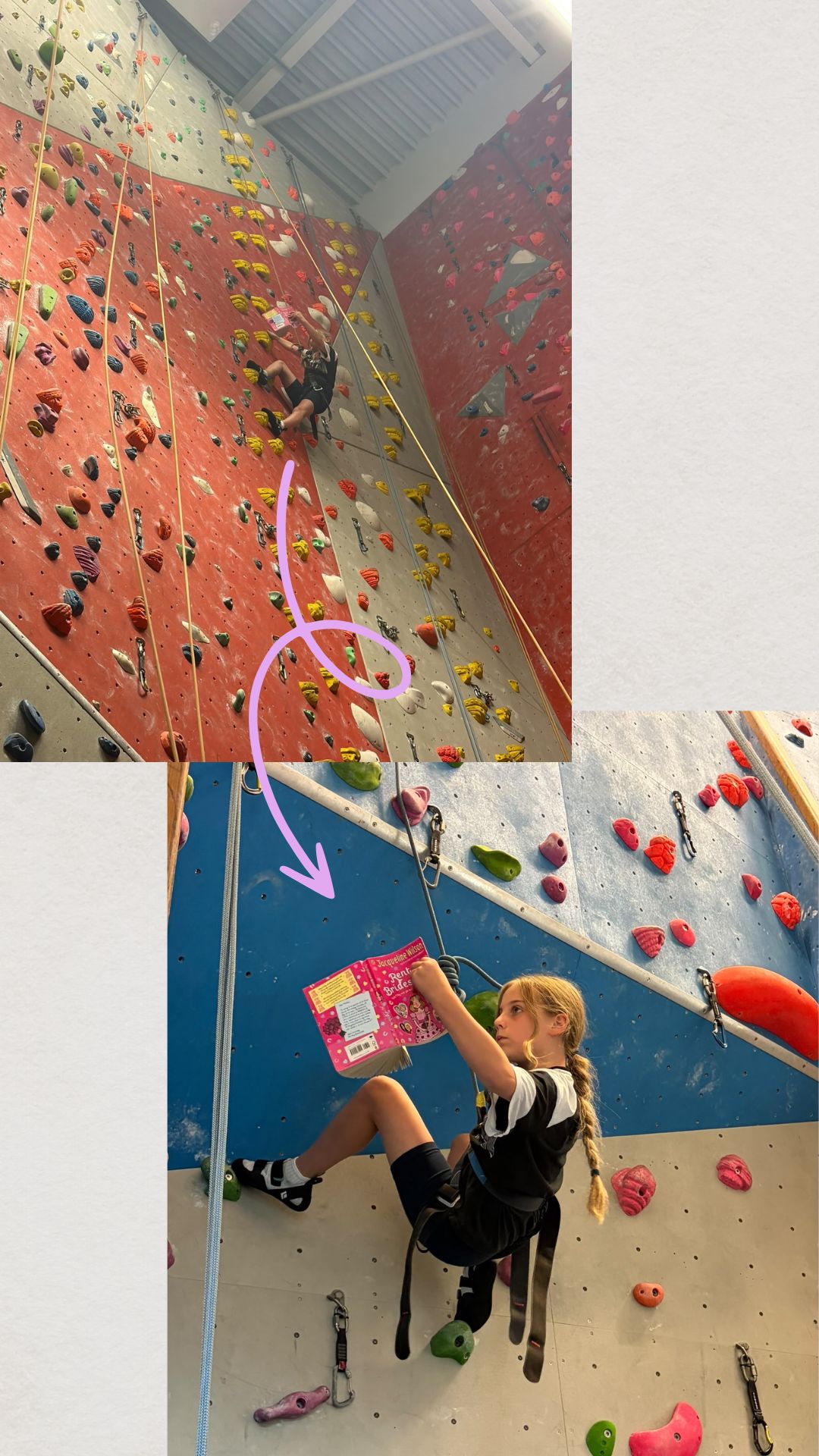
Leia R, 7K
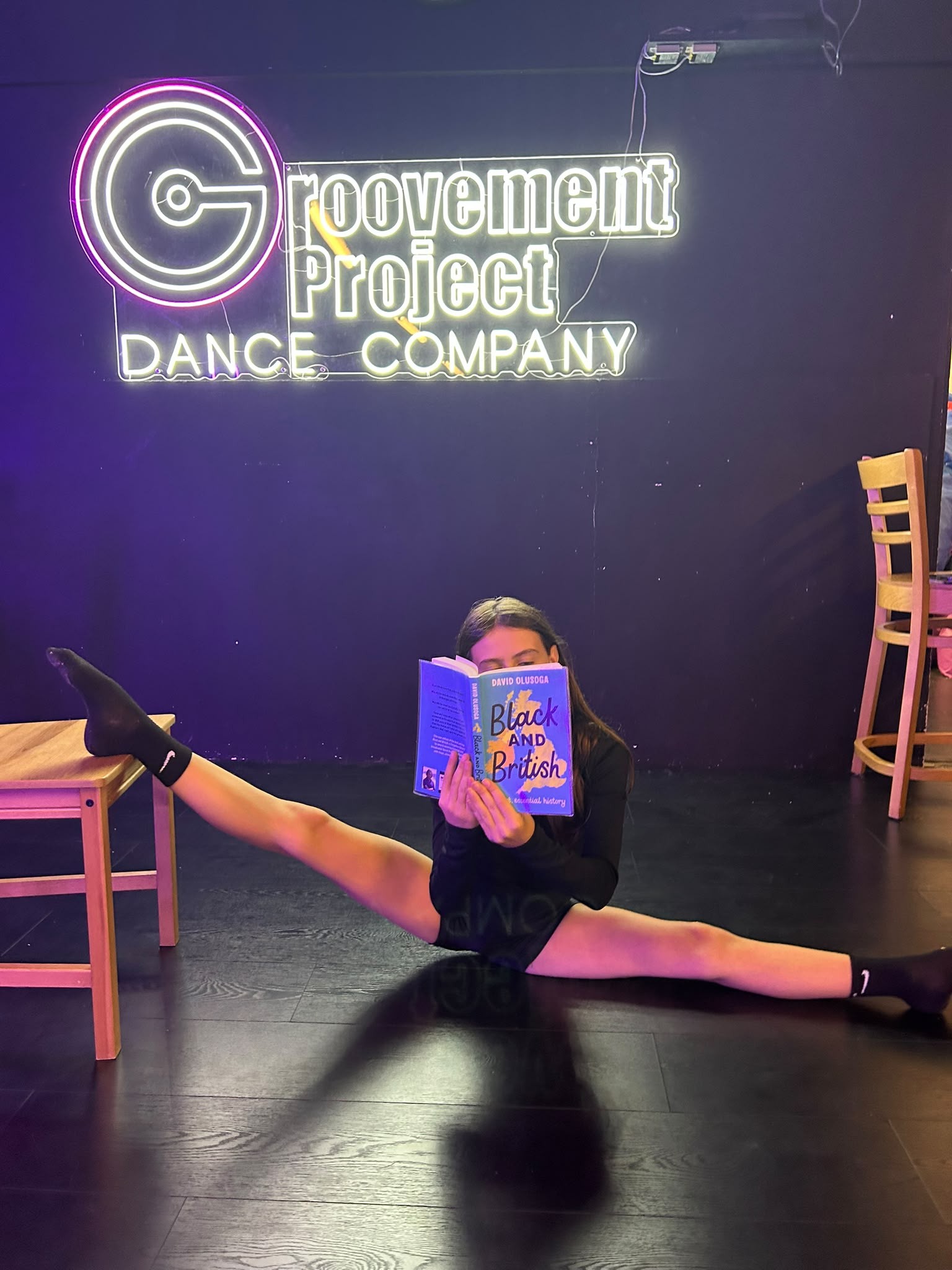
Helen F, 7A
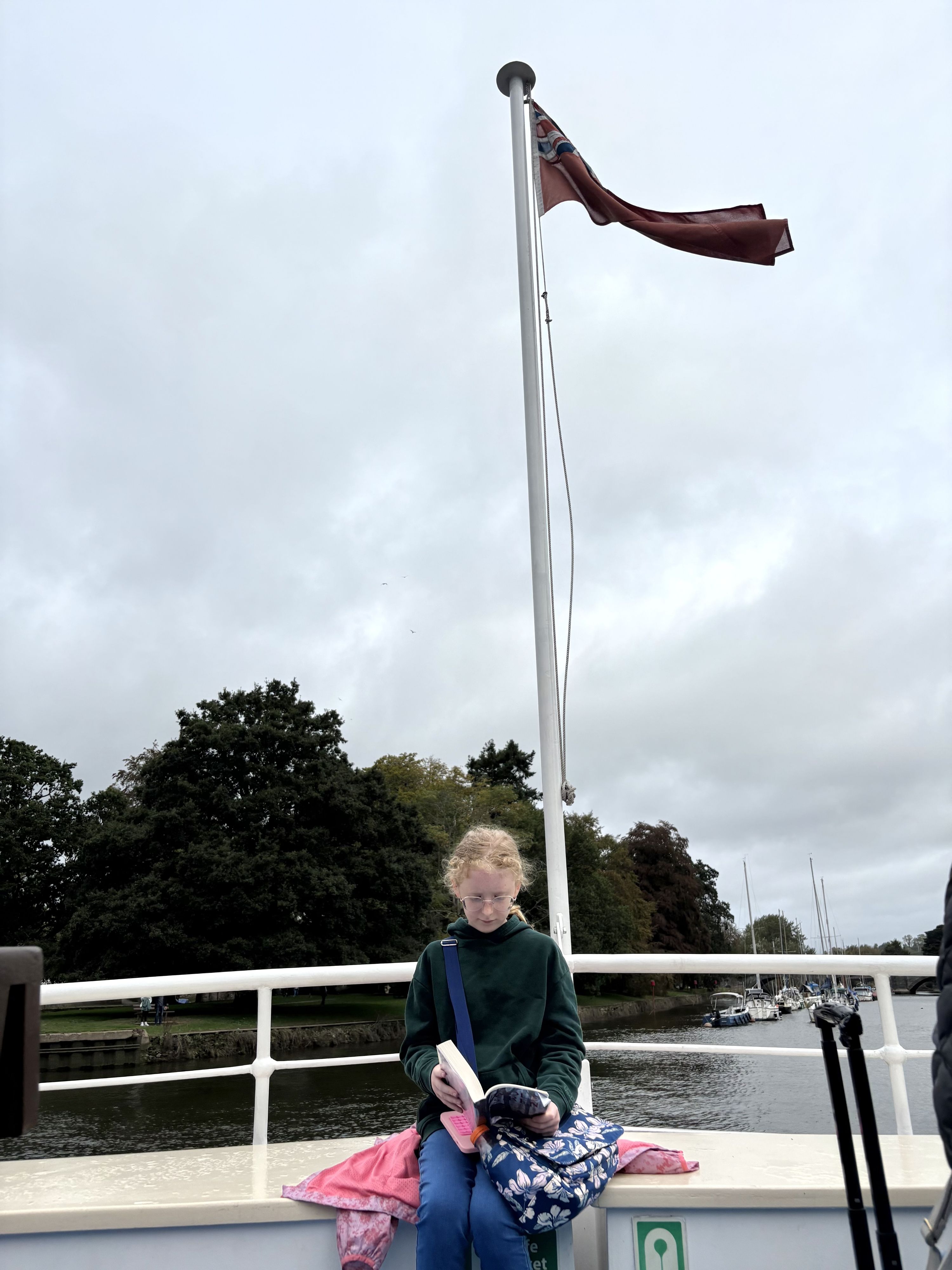
Immy D, 7A
Eva P, 7L
Sophie V, 7K
Bebe W, 8K
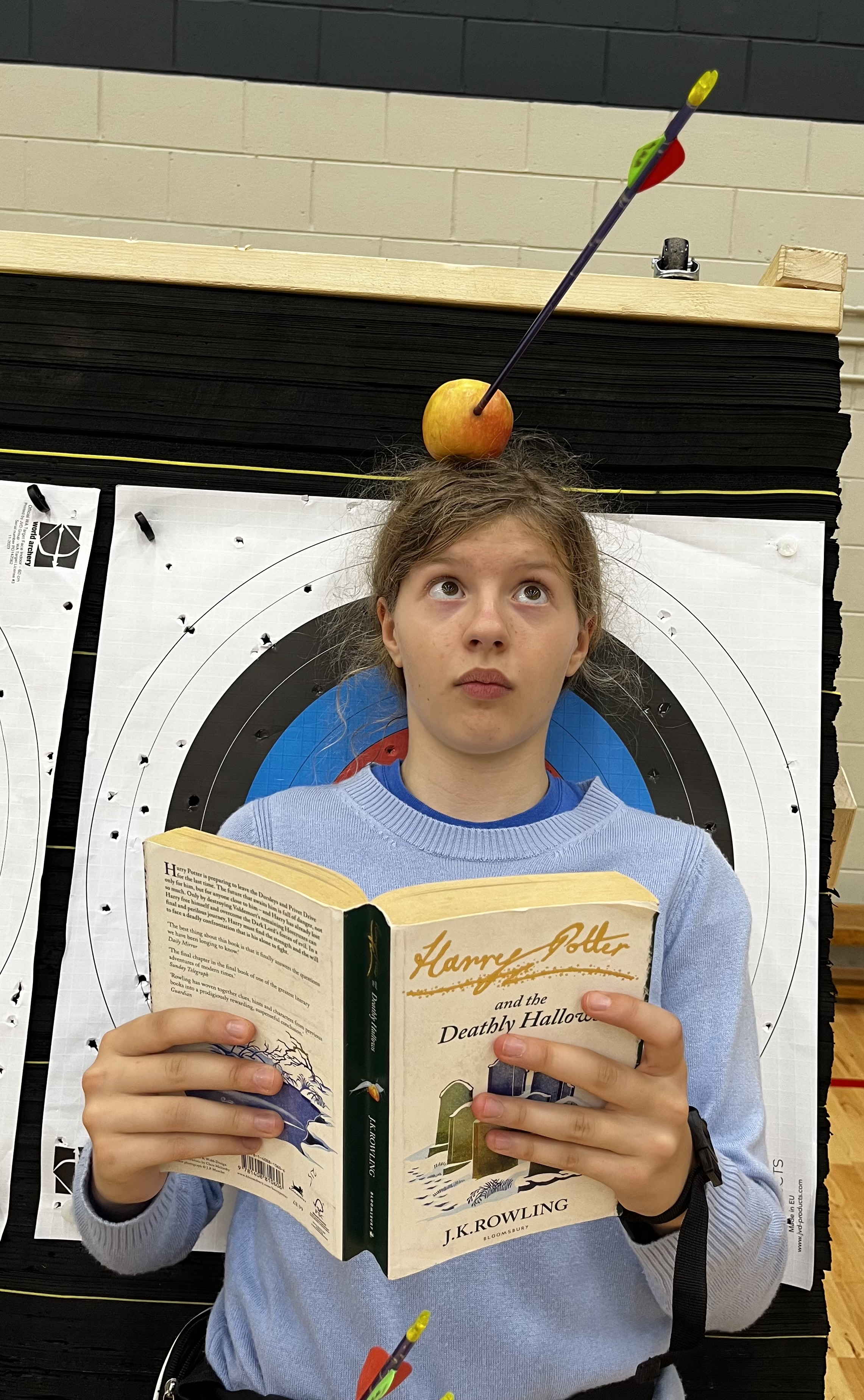
Chloe J, 9T
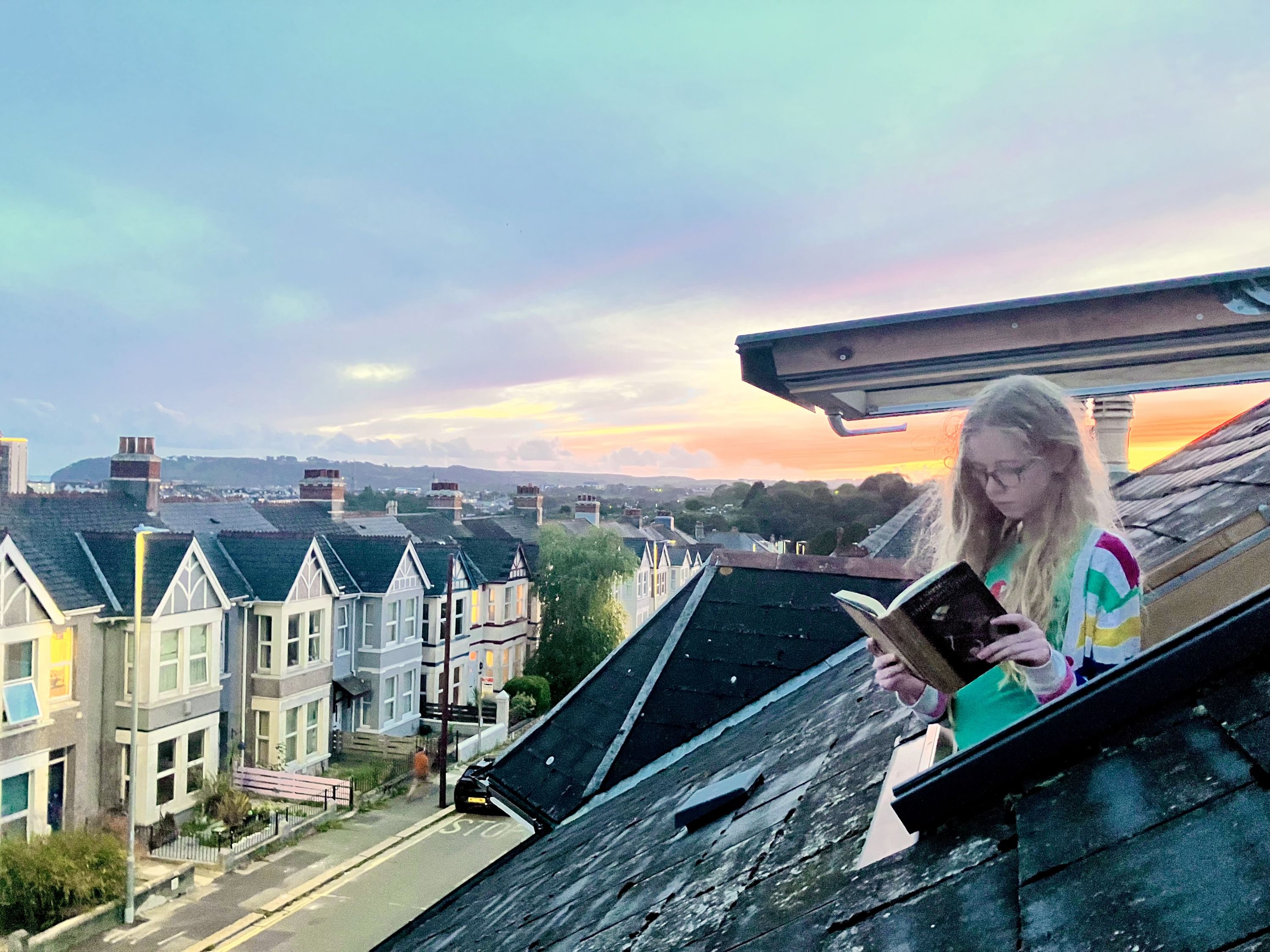
Ruby S, 9K
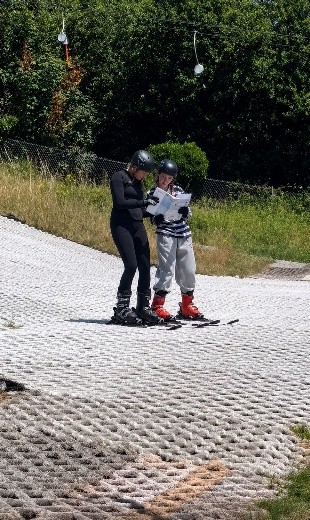
Bee P, 9L
(In front of the highest mountain in England, next to the deepest lake, with an American jet flying overhead)

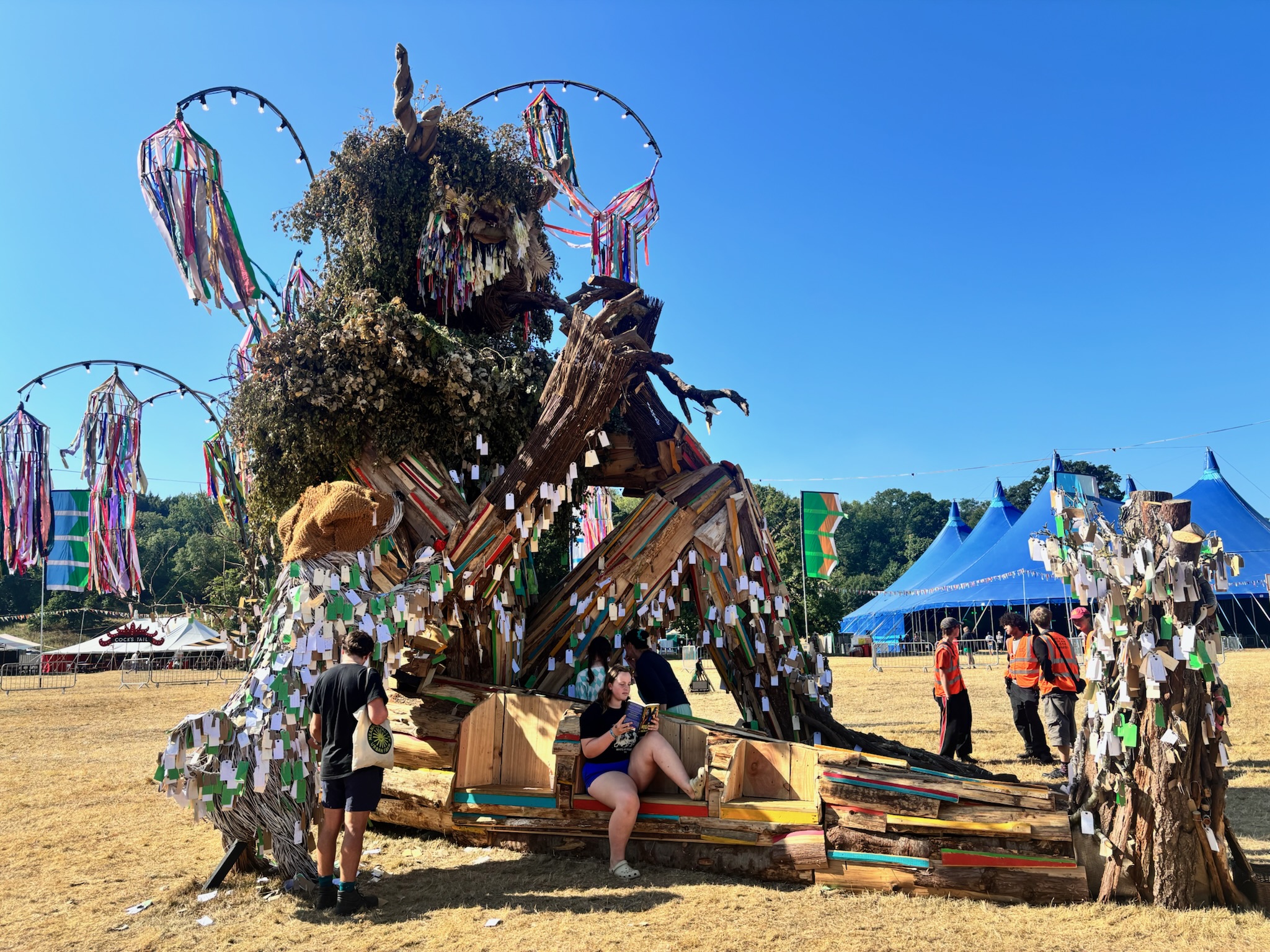
Eva T, 9L
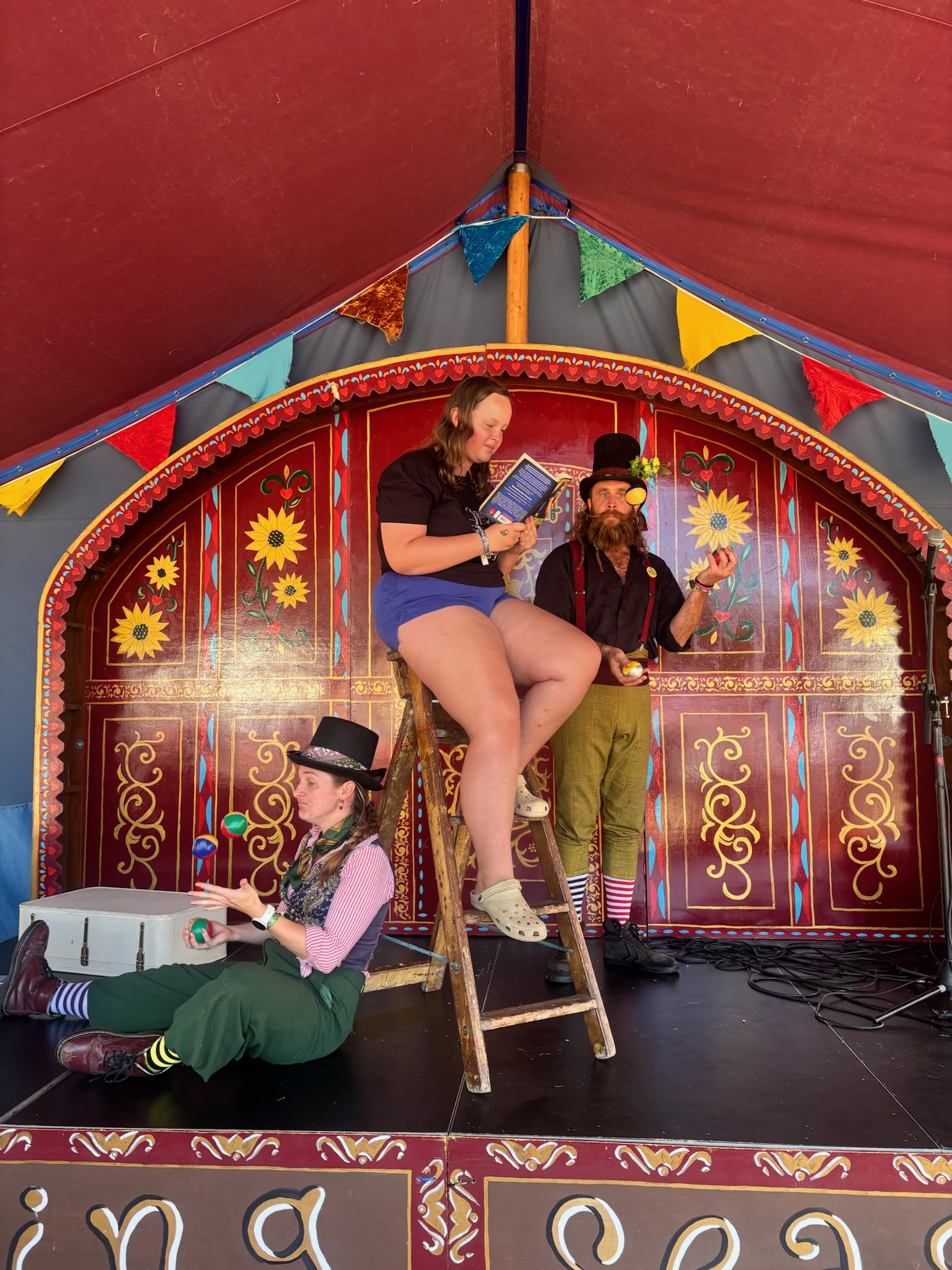
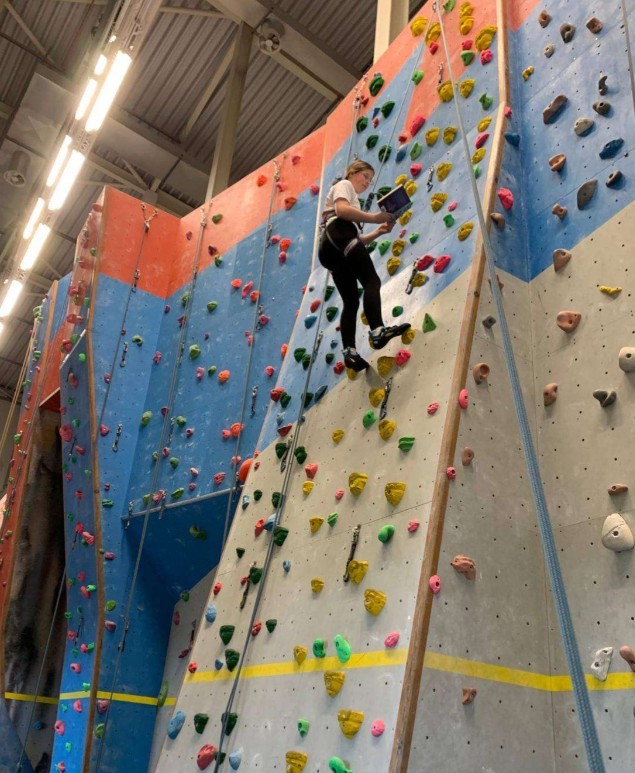
Lucy O, 9L
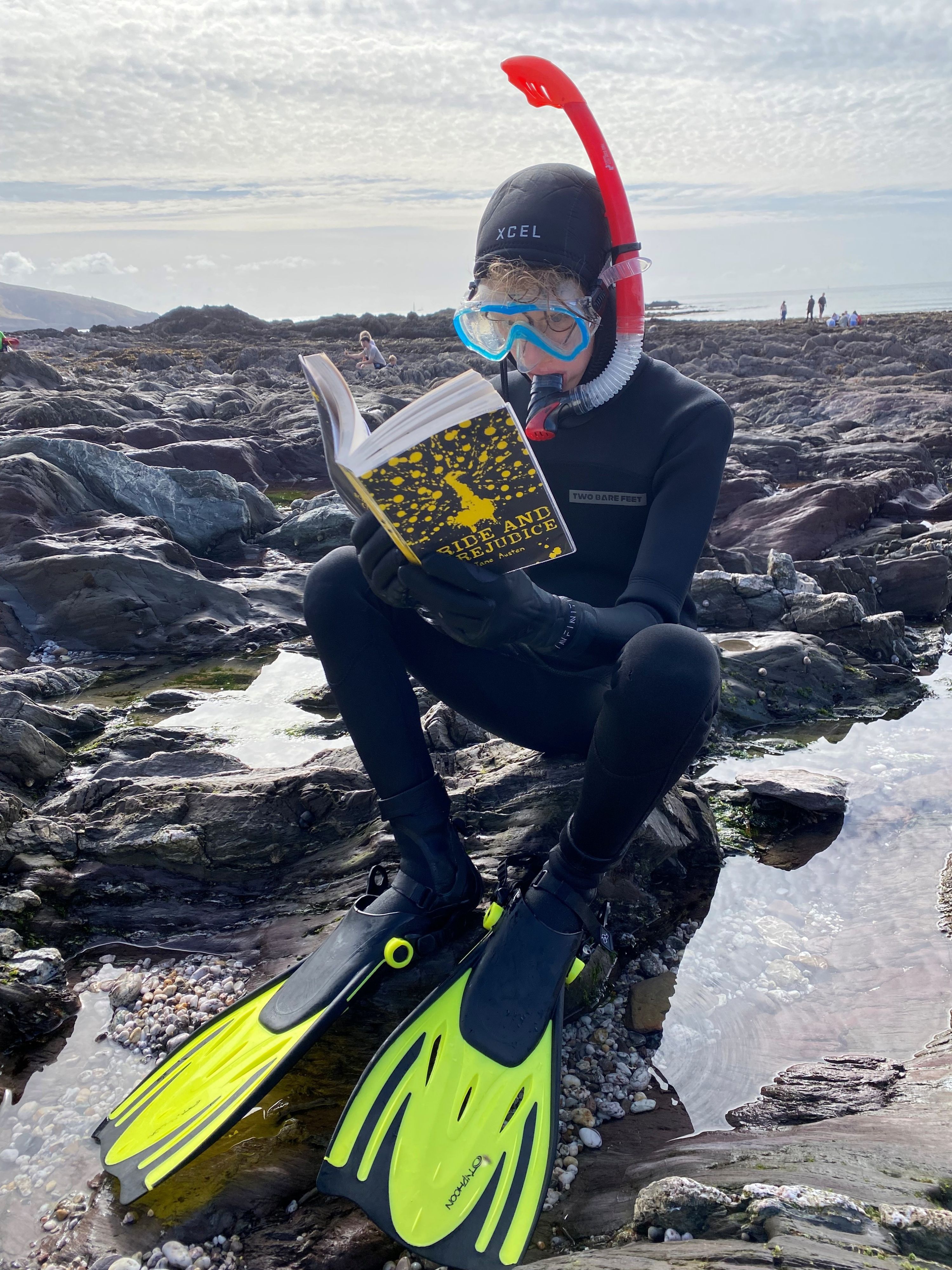
Bee H, 9A
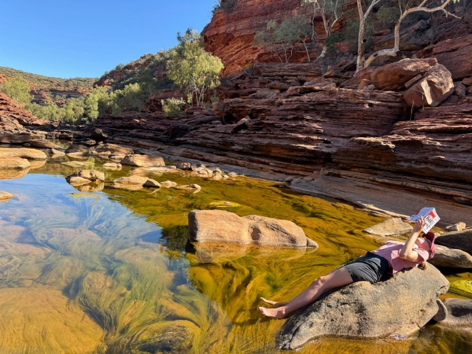
Charlotte M, 10T
(510 mile long Murchison River - Kalbarri National Park, Western Australlia)
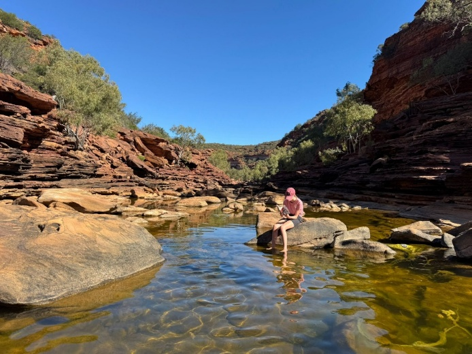
Poppy M, 10A
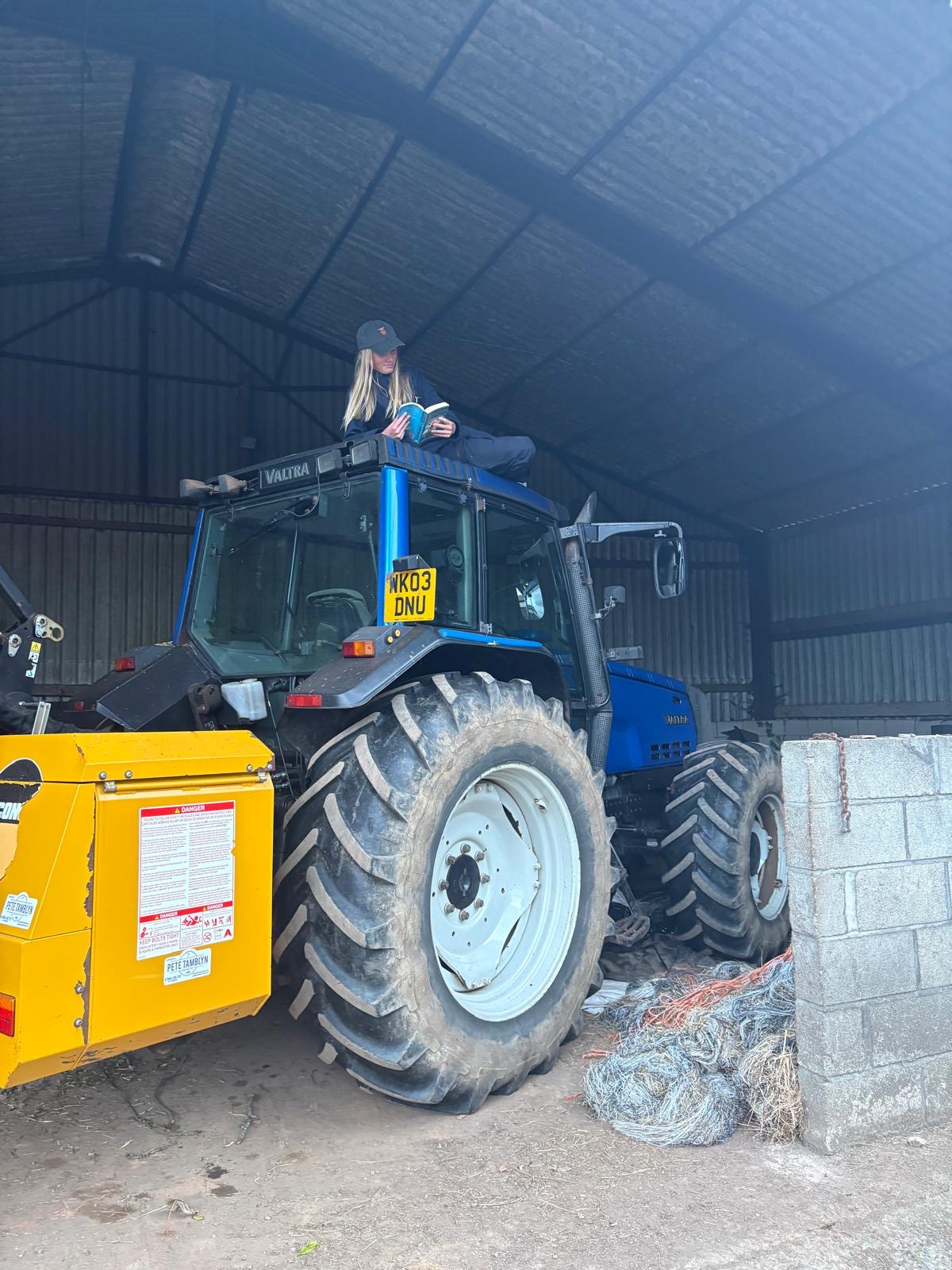
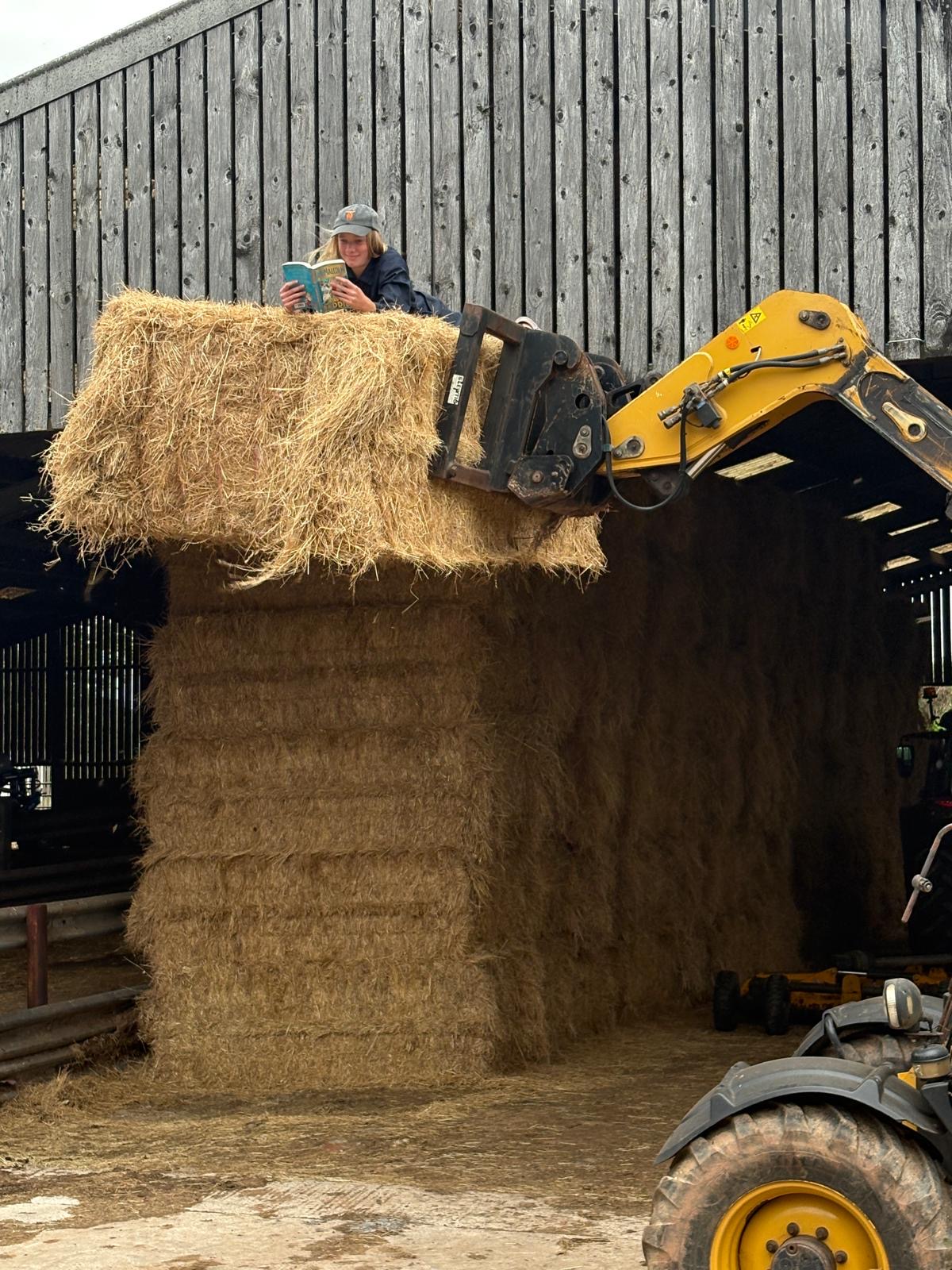
Chloe D, 13T
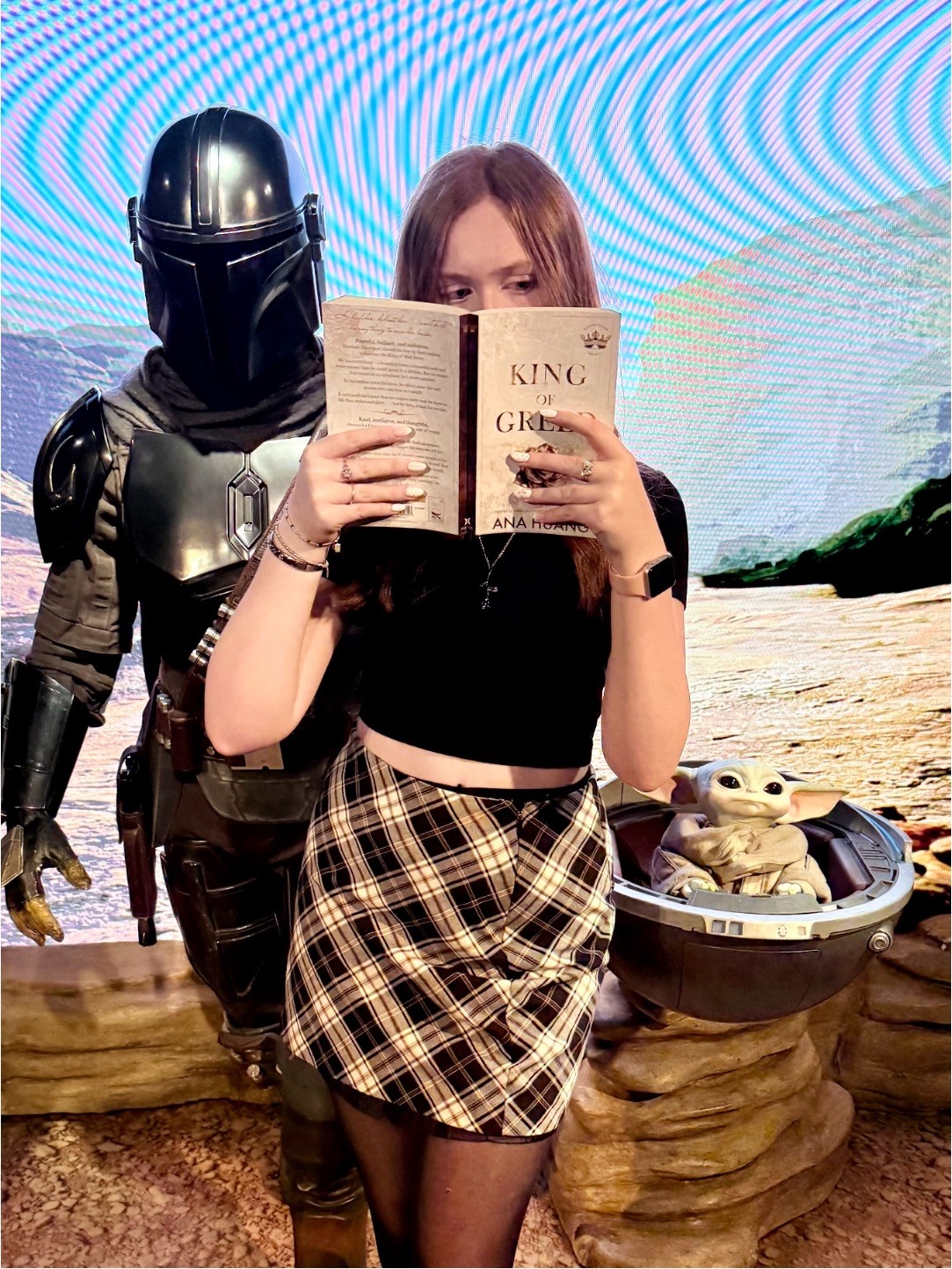
Staff submissions
Miss Noble, Office Manager
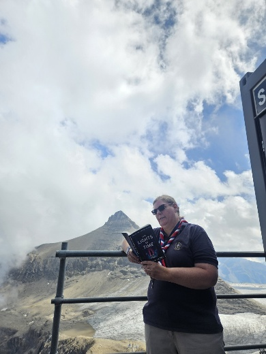
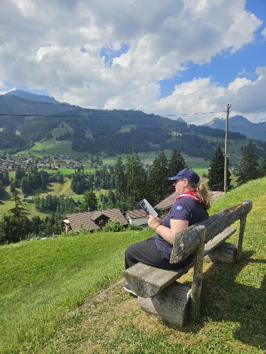
Mrs Moody, Attendance Improvement Coordinator
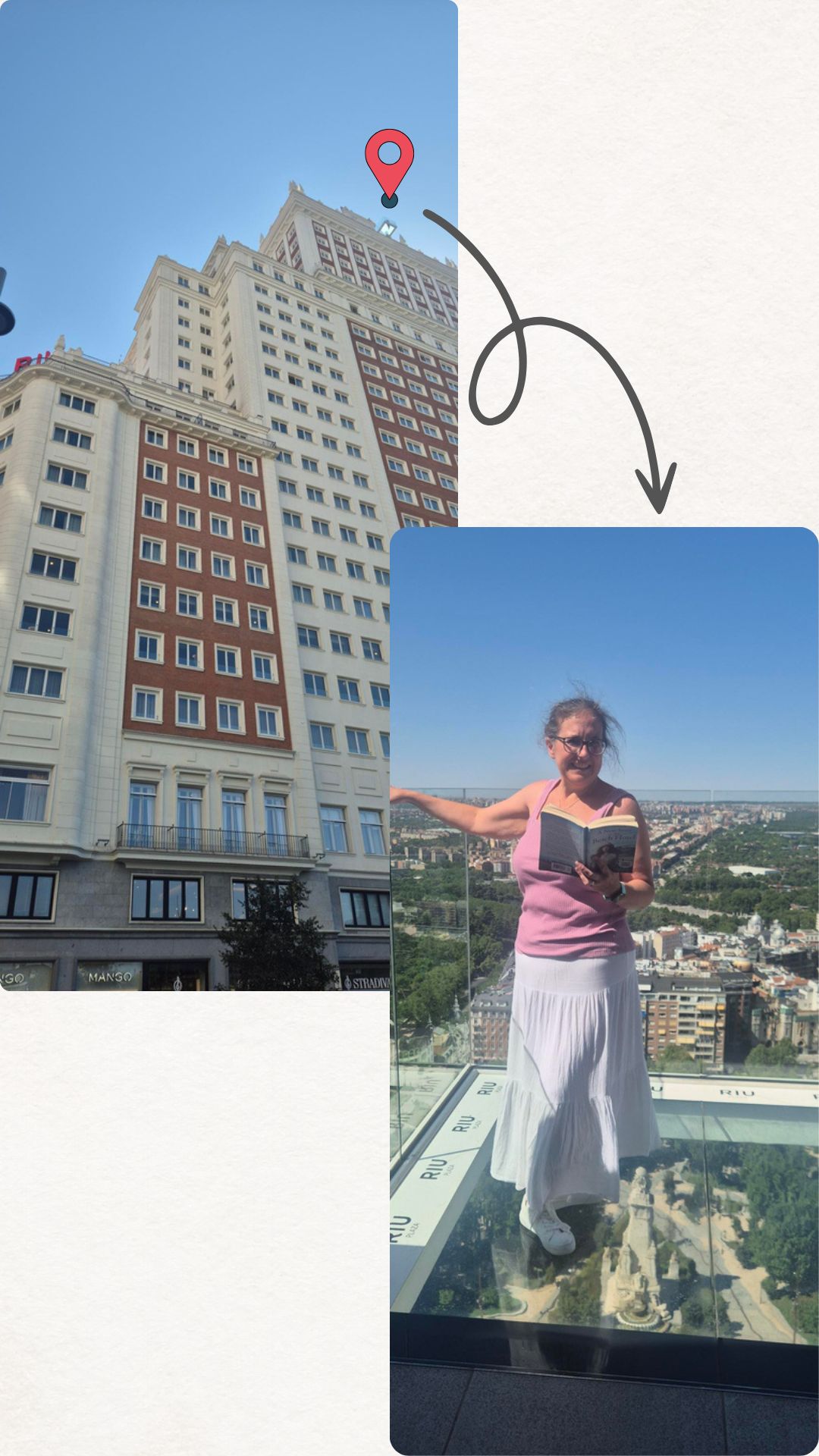
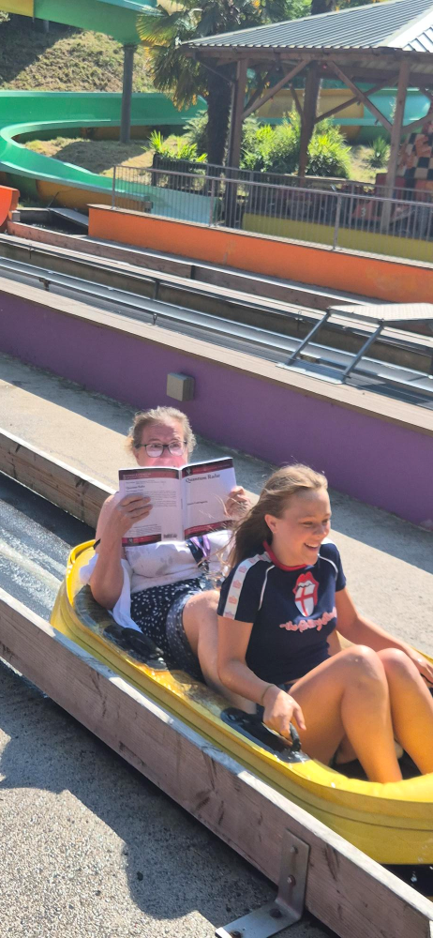
Miss Joynes, Associate Assistant Headteacher and Head of Year 7
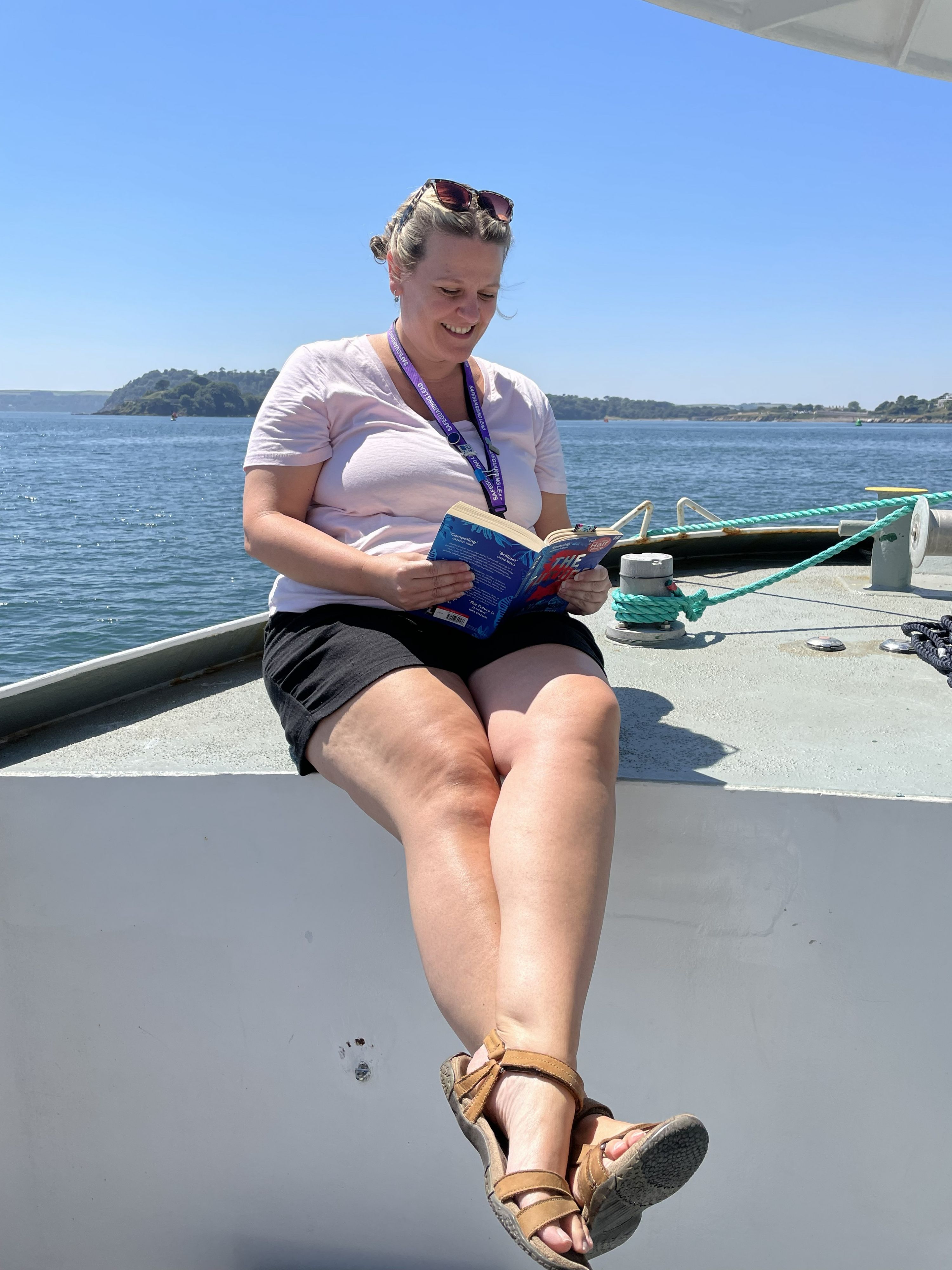
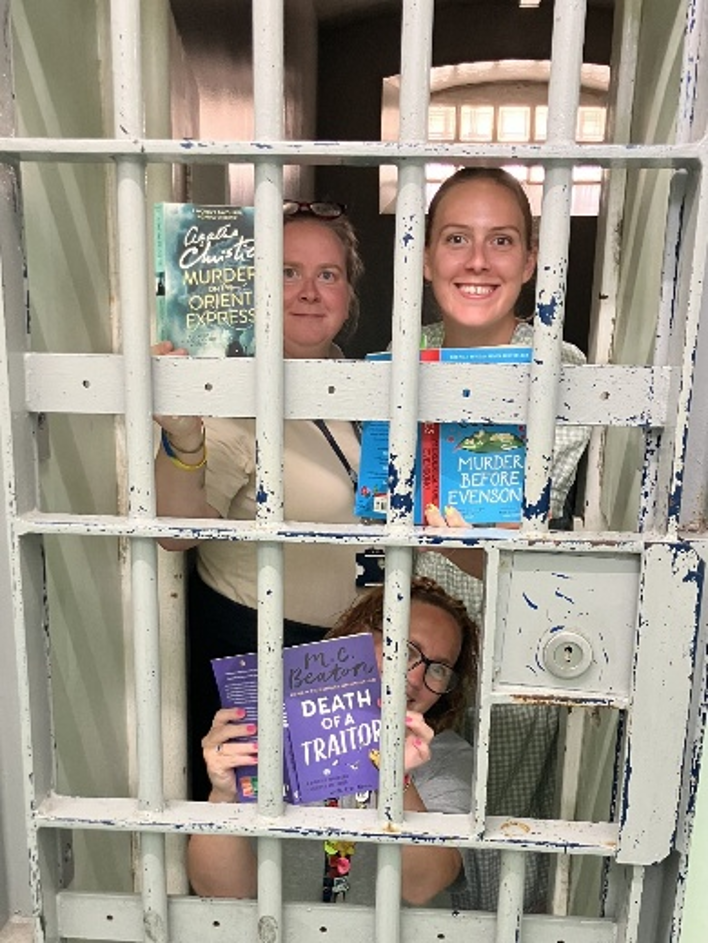
Miss Barnett, Miss Richards, and Miss Shattock
Mrs Freeman, Curriculum Lead for Maths
Mrs Brownbridge, Teacher of RS
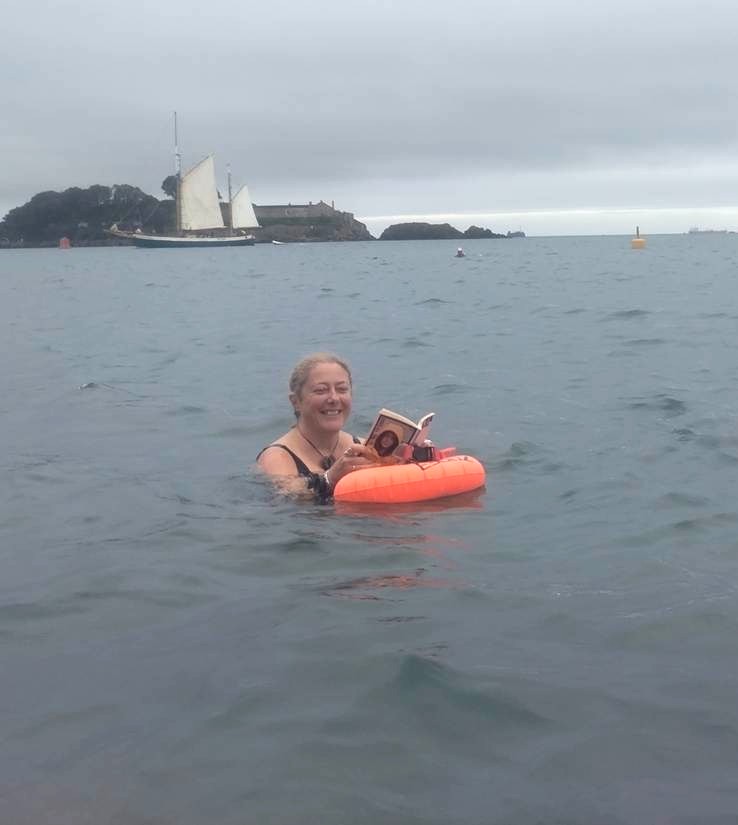
Mrs Brown, Teacher of Food & Textiles
Staff & Student Bookshelves
Below, our literature-loving staff and students share which books and authors feature on their own bookshelves at home:
Mr Underdown, Headteacher
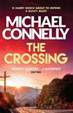
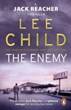
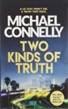
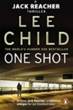
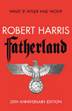
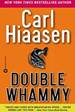
I love a ‘who done it?’. Stories where the reader is led on a journey through a mystery that culminates with a significant discovery. I have often wondered if this is somehow linked to my enjoyment of mathematics, working through a problem to get ‘an answer’. I very much enjoy authors who can paint a picture for me, who write in a smooth and elegant fashion and who pop twists and turns into their writing.
I usually choose fiction but also enjoy non-fiction. I was given Mr Wilman’s Motoring Adventure by Andy Wilman for Christmas and devoured it. When I find an author I like, I usually read everything I can find written by them. To this end, I haven’t included in my bookshelf below all the Carl Hiaasen, Lee Child, Robert Harris, Richard Osmond and Michael Connelly books I have, just a couple of each. Bella Mackie is wonderful; her writing is so clear and simple, and I found I just skipped through the pages. Her books are such a rewarding read.
If I were to make a single recommendation, I might go for Richard Osmond’s Thursday Murder Club books. I thought they were fabulous. Happy reading everyone.


Miss Roughton, Deputy Headteacher
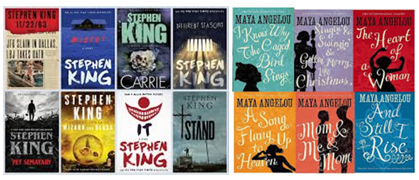
My two favourite authors couldn’t be more different in style: Stephen King and Maya Angelou.
Stephen King is a master of suspense and storytelling; his ability to create tension and develop complex characters keeps me turning pages late into the night. His books remind me how powerful imagination can be.
On the other hand, Maya Angelou’s writing is full of wisdom, beauty, and resilience. Her poetry and autobiographical works speak to the strength of the human spirit and the importance of empathy.
Both authors, in their own way, explore what it means to be human: one through gripping fiction, the other through lyrical truth.
Miss Redmond, PA to Mr Underdown
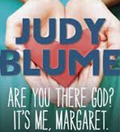
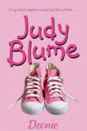
Growing up in America, my love of reading began the way it does for most children of my generation – curled up with a Judy Blume book. Her writing was funny, honest and deeply understanding of what it felt like to be growing up at that time.
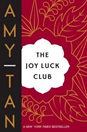
I’m now especially drawn to the imagery, symbolism and emotional richness found in authors like Jung Chang (Wild Swans) and Amy Tan (The Joy Luck Club) who create an entire world in a single paragraph – filled with heritage, memory, and the complex beauty of family dynamics.
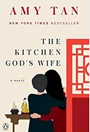
One novel that has stayed with me is The Kitchen God’s Wife, a story that bridges generations and cultures, showing how tales passed down between mothers and daughters can wound, heal and ultimately shape identity.
From Judy Blume’s open-hearted honesty to Amy Tan’s evocative imagery, my reading journey has taught me to listen, imagine, and empathise – giving me new ways to understand myself and opening windows into understanding the lives of others.
Mr Tiago Moreira, TSAT Facilities Team at PHSG
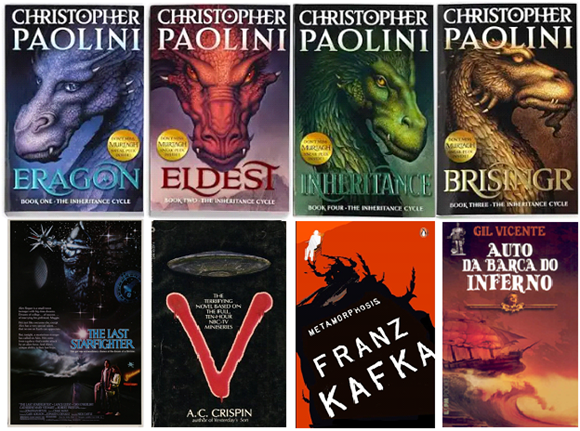
My favourite book series for years has been Eragon. I was hooked from the very first read. The blend of fantasy, rich world‑building, and meticulous detail makes it incredibly immersive. I own both physical and digital copies, and I still find myself returning to them from time to time.
From a very young age, my mom introduced me to sci‑fi, and the very first book I ever read in the genre was The Last Starfighter. It became my gateway into the world of science fiction and sparked a lifelong love for the genre, both in books and in movies.
Mrs Brown, Teacher of Food & Textiles and Head of Anthony House
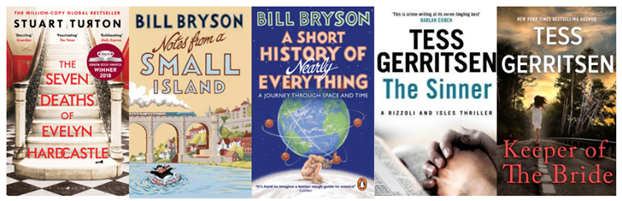
I am always drawn to books that challenge the way I think and keep me guessing right to the end. This is why I enjoy the work of Stuart Turton so much. ‘The Seven Deaths of Evelyn Hardcastle’ is my favourite of his novels. I loved the intricacy of the plot and the feeling of uncovering a mystery one layer at a time. There is something incredibly satisfying about following clues and patterns until everything finally makes sense.
I also have a real soft spot for Bill Bryson. His writing is full of warmth, humour and curiosity, and I often find myself laughing one moment and learning something fascinating the next. Whether he is travelling across countries or exploring science and history, his books feel like conversations with a very observant and very witty friend.
When I want something gripping and full of tension, I turn to Tess Gerritsen. Her stories move quickly and her characters stay with me long after I have finished reading. I often find that I intend to read just one chapter, and suddenly I am halfway through the book.
Once I connect with an author, I like to read widely across their work. There is something reassuring about returning to a familiar writing style while still discovering new stories and ideas.
If I were to make a recommendation, I would encourage anyone to read Bill Bryson’s ‘A Short History of Nearly Everything’. It does exactly what it says on the tin, but in a really interesting way for curious learners.
Miss Hofmann, Teacher of Modern Foreign Languages
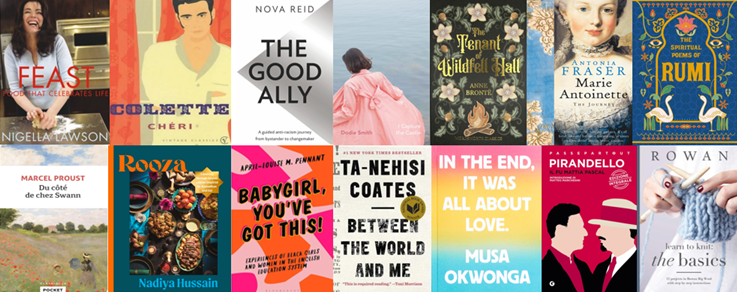
I have many, many, many books. In fact, I have a whole wall in my house covered by a giant bookcase from floor to ceiling. There are all kinds of books – big books, small books, new books, and old books. For me, books are so much more than just paper. They are the beginning of mini adventures or experiences. I could be looking at the cookery books and thinking about the family dinners, dinners with friends or Village dinners that I’ll cook for. I could be looking at the craft books finding inspiration for Christmas, birthday, or “just because” gifts. I could be looking at the novels where tiny worlds wait to be explored. I could be re-reading the familiar favourites – those books that I have returned to again and again, which comfort in their familiar characters and stories. I could be looking at the French, German, Italian or Spanish books – an adventure into language itself. Anything is possible. All I have to do is choose one and open its pages.
When thinking about my favourite books on the shelves, I would have to pick a cookery book which is very precious to me. It doesn’t look like much – a plain cardboard cover which has been patched over and over again with Sellotape by many different hands. Faded pencil marks on the front simply says “Recipes”, but this modest cover does not do justice to its contents. As you open the cover you find handwritten recipes from various generations of cooks from my family: some completely handwritten by someone, edited in a different colour by another; some have titles, “Birthday Cake for Tom”, “Dinner 23rd March”, “Marjorie’s coffee cake”, and some speak of different times with ingredients like “powdered egg” or “a lb of lard”. Each one reflecting a history of cooking, time spent around a table, celebrations, community, and everything in between.
You’ll find abandoned shopping lists as well, splattered notebook pages, or coupons from cereal packets, pages taken from magazines and other books – occasionally marked with a double tick and “very good” which is the highest praise.
As you leaf through, the writing becomes more familiar – my granny’s looping handwriting, my grandad’s country school scrawl, my nonna’s Italian script, my opa’s recipe for Sauerkraut, and my mum’s writing. Now, I take pride in adding my own – sometimes ones that I have written or that people have given me, sometimes in different languages. My niece, who has recently learnt how to write, has added her own recipe for her favourite dish - “tomahtow pasta”.
A book, yes, but also a universe and a history contained in its simple covers. It is, and always will be, the best book on my bookshelf.
Mrs Will, Data Manager
Over the years I have read many books encompassing a wide variety of genres. As I have got older, my tastes have changed and I now veer more towards feel-good or light-hearted books. My only memory of reading as a child is a book about Elizabeth, ‘The Naughtiest Girl in the School’. My Dad despaired of my lacklustre enthusiasm for books. Fortunately reading is something I now enjoy, and we even have some authors that we like in common such as Carl Hiaasen. This gives me hope that one day my daughter will love reading as much as me.
Nowadays, I can devour a good book in a weekend but can also go weeks before I read another. I am rubbish at remembering the names of books and their authors so this has taken me ages to make as I have had to go through my Kindle and Google storylines so that I can find the book names. I always remember whether I liked the book and how it made me feel though!
I am currently reading ‘How to kill your family’ by Bella Mackie which was recommended to me by a colleague. It feels different to anything I’ve read before, and I like the style of writing. The title suggests it’s gruesome, but it isn’t. It is amusing and a bit sad so far.
Years ago, I loved reading ‘Eleanor Oliphant is Completely Fine’ written by Gail Honeyman and recently, whilst looking for a similar book, I decided to read it again! It is the only book I have read twice.
Jodi Picoult’s “Wish you were here”, a story set during covid, was a very interesting recent read with a big twist in the middle (well, I didn’t see it coming) and it put me off the book when it happened, but I continued with the book and after reading the author’s notes (something I don’t normally do), I decided I did like the book as it was based on peoples real (although very bizarre) experiences during covid.
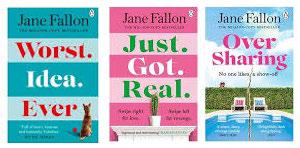
Jane Fallon is a recent favourite author of mine, having read many of her books. Her books include romance, comedy, betrayal, revenge, friendship, and life-changing decisions. Always a happy ending and suitable outcome for the baddy!


Mrs Moody, Attendance Improvement Coordinator
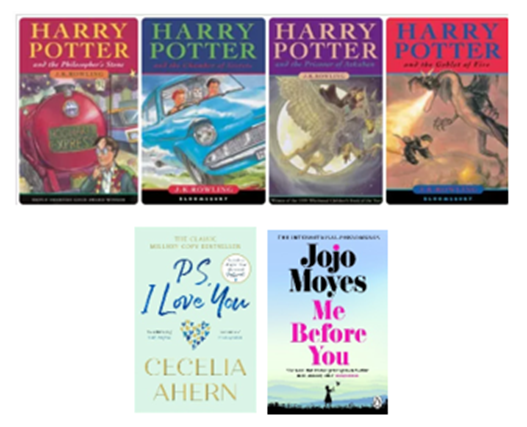
When I read a book, I like something light‑hearted that lets me escape from the real world for a while. I absolutely loved the Harry Potter series when I read it all those years ago, and the books still have pride of place on my bookshelf. I’ve passed that love on to my son – although I think his enthusiasm surpasses mine! The Harry Potter books are the only ones I’ve read in that particular genre, as I usually gravitate toward a good, uplifting “feel‑good” read.
For example, you can’t beat an old‑fashioned, easy‑to‑read story that follows the trials and tribulations of families in London during wartime, or a book that has you laughing out loud on one page and crying on the next – something like “PS, I Love You” or “Me Before You”. There’s nothing quite like setting your own worries aside and becoming completely absorbed in the lives, loves, and laughter of the characters.
I’ve always felt that a truly good book is one that makes you want to read just one more page because you simply have to know what happens next, while at the same time not wanting it to end at all.
Thrillers or anything too “scary” are definitely out for me – I like to be able to sleep at night. I much prefer stories that lift you up rather than leave you checking the shadows, and there’s something wonderfully comforting about knowing a book will make you smile rather than keep you awake.
Mrs Brownbridge, Literacy Lead
My ‘bookshelf’ has evolved into something more virtual than physical as I have got older. This doesn’t mean that I don’t own books, my Kindle library is extensive, spanning a wide range of genre and this doesn’t include all the ebooks/audiobooks I borrow through Borrowbox (a free app through Plymouth Libraries). My ideal is being able to switch between the audio and kindle versions of the same book.
Reading can serve so many different functions, and while ‘reading for pleasure’ is a key phrase in the media now as part of the ‘National Year of reading’, my favourite reads are often ones that have uncomfortable and challenging elements. I especially like dystopian fiction for its exploration of ‘what if’, making me consider contemporary ethical issues anew.
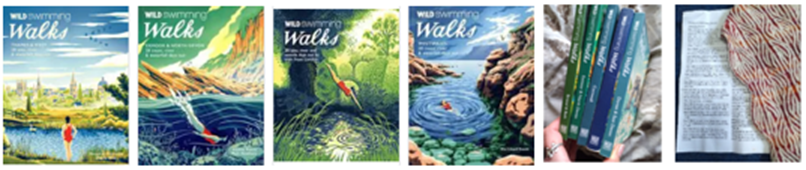
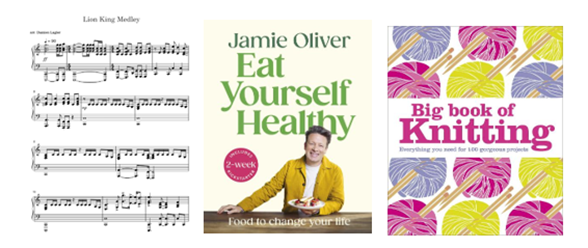
There are times when a physical book is useful though, and I love the ‘Wild swimming walks’ series. I’ve a small collection of these and take the relevant book with me when exploring somewhere new. I’ve also got an ever-growing collection of knitting books; my current obsession is brioche (the knitting style, although the bread is nice too!).
Miss McAuliffe, Teacher of RE
While I don't have much in the way of physical books like novels, at home, it's not that there are no reading materials. My 'bookshelf' links to my hobbies and interests.
I've got the music for the SWPC, a community choir and orchestra that I'm a member of, and this includes a variety of musical titles, including some Swahili (The Lion King). I enjoy knitting (wrestling wool from my cats, less so) and have plenty of knitting pattern books.
I also enjoy baking and cooking and have a number of books with recipes that I adapt. My current favourite is 'Eat yourself Healthy' by Jamie Oliver.
Ms Akeroyd, Catering Manager
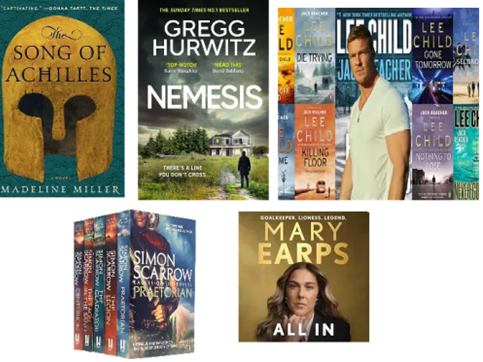
These are some of the books that I have enjoyed recently, an eclectic mix. But what is life without variation? I love a good historical novel, a mixture of facts and fiction. Kate Mosse is an excellent example of this genre and would highly recommend any of her books.
Ellen S, Head Student 2026
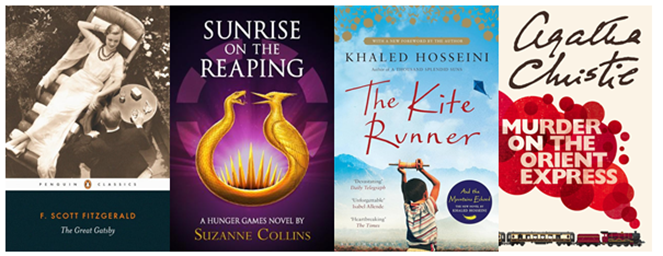
I would never part with some of the books on my shelf that I read when I was younger – I adored Enid Blyton and absolutely devoured the boxset of Malory Towers I received one Christmas. History has always been one of my favourite subjects and my bookshelf reflects this with my all-time favourites allowing me to delve into the past: Hetty Feather by Jacqueline Wilson, Anne of Green Gables by LM Montgomery and The Magic Faraway Tree by Enid Blyton. All of these still sit on my bookshelf, definitely well-loved!
Nowadays, my bookshelf is split into roughly three categories: old/contemporary classics (at the moment, I am reading The Great Gatsby by F Scott Fitzgerald), mysteries like Murder on the Orient Express by Agatha Christie, and dystopia. I was so invested in Suzanne Collins’ new Hunger Games novel, Sunrise on the Reaping, that I read it in two days!
I think it is wonderful how a person’s bookshelf can reflect the trajectory of their taste and hold memories so well. I love taking book recommendations from my friends too. The next book I am planning to read – The Kite Runner by Khaled Hosseini – was recommended to me by Zara, Deputy Head Student (Diversity and Inclusivity)!
Zara U, Deputy Head Student 2026
I’ve always liked books that reflect real life, even when they’re a bit uncomfortable. For me, reading isn’t just about escaping, it’s about understanding people a bit better.
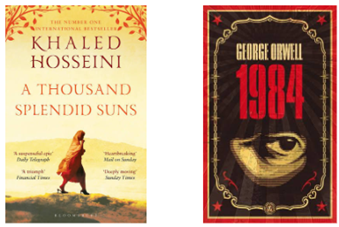
If I want something that really makes me think, I go back to 1984 by George Orwell. The idea of “thoughtcrime” and Winston trying to hold onto his own thoughts is really powerful, and it makes you think about how important it is to have your own voice.
But when I want something more emotional and beautifully written, I turn to Khaled Hosseini. A Thousand Splendid Suns is one I couldn’t put down, it’s sad, but also really powerful. The relationship between Laila and Mariam is so moving, and it shows how strong people can be for each other even in really difficult situations.
Once I find an author I like, I usually end up reading everything they’ve written. There’s something really comforting about a familiar writing style, even when the stories are completely different.
Catarina L, Deputy Head Student 2026
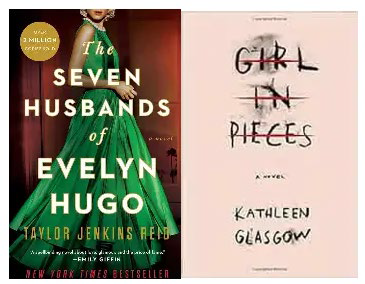
I have always been someone who looks for a reflection of the real world in the pages of a story - not just the world we see, but the people who live in it. This is why I find the work of Taylor Jenkins Reid so incredibly powerful, her writing is all about the human heart and the masks we wear.
The Seven Husbands of Evelyn Hugo is, without a doubt, my favourite of her novels. It follows an aging Hollywood icon recounting her life’s secrets, but at its core, it is a masterclass in representation. Seeing a bisexual woman of colour navigate the golden age of Hollywood resonated with me deeply. It highlights why diverse voices in media are so vital; they don’t just tell a story, they validate the experiences of people who have historically been pushed to the sidelines. There is something profoundly moving about seeing a character fight for their truth in a world that wasn’t built for them.
What makes Taylor Jenkins Reid’s work even more addictive are the ‘Easter eggs’ hidden throughout. I realised quite early on that her books – like Daisy Jones & The Six and Malibu Rising – actually all take place within the same fictional universe. Finding a character from one book mentioned in a news clipping or a party scene in another feels like catching up with an old friend. It creates a rich, interconnected world that makes the reading experience feel much more immersive.
On the days when I want something more contemporary, I’ll pick up a book by Kathleen Glasgow. Girl in Pieces is a difficult but essential read. It tackles the heavy reality of mental health with such honesty that it can be a lot to process, but that’s exactly why it matters. Just like the representation in Reid’s books, seeing the ‘unfiltered’ parts of the human experience in Girl in Pieces makes readers feel less alone.
Mrs Freeman-Alford, Curriculum Lead for Mathematics
I will start with a confession. My ‘bookshelf’ pre-2026 was not particularly sophisticated and mostly featured classics such as The Smeds and the Smoos and Oi Frog. Whilst I will always treasure sweet memories of reading with my children, it is clear that I had not made space for reading in some time.
The ‘26 in 26’ challenge has overhauled my reading habits. I cannot turn down a challenge, and I am proud to say it has rebooted my interest in reading and my ability to fit it into everyday life. I am already ahead of target and was more than halfway through the challenge by April.
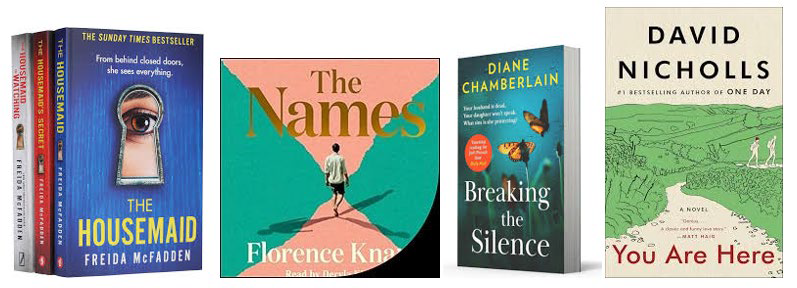
I began by reading some books that have been turned into movies before watching them, including The Housemaid by Freida McFadden. I also read Colleen Hoover’s November 9, which isn’t on the big screen, and what started as a teenage love story developed into something much more interesting, with some great surprises along the way.
After a few more Freida McFadden books (I also ranked The Perfect Son highly), I realised they all feature a late plot twist. When I correctly worked one out early (of course it was the husband!), I knew that despite being proud of my unpaid detective work, my Freida McFadden days were probably over.
More recently, I have been reading a mix of authors, and these are the books I would most recommend:
• The Names by Florence Knapp – A fantastic book that follows one boy through three versions of his life depending on which of three names his mother chooses for him at birth. 5/5 from me.
• Breaking the Silence by Diane Chamberlain – A book that surprised me by how much more there was to it than the synopsis suggested. The story of a traumatised young girl who has stopped speaking is intertwined with the history of brain control experimentation. It should not work, but somehow it does, with some unexpected twists along the way.
• You Are Here by David Nicholls – A slow burner and a slightly cheesy romance, but light-hearted, funny and enjoyable. It follows two stubborn single adults who gradually break their own moulds during a walking trip.
I am looking forward to seeing what my Kindle suggests next, and I WILL complete my ‘26 in 26’. Reading so many books has been relaxing and very enjoyable, although it has also proved expensive after I lost my Kindle in February and had to replace it!
Mr Adrian Walmsley, School Governor
My bookshelf continues to evolve, and grow, as I find relinquishing myself of books I’ve read an incredibly difficult task (and, truth be told, there are plenty of books on my bookshelf I have yet to read). I do have a virtual bookshelf, but personally, I still enjoy the physicality of picking up a real book, especially an old book where both the book’s content and feel provide a bridge to the past (time-travel is in fact possible).
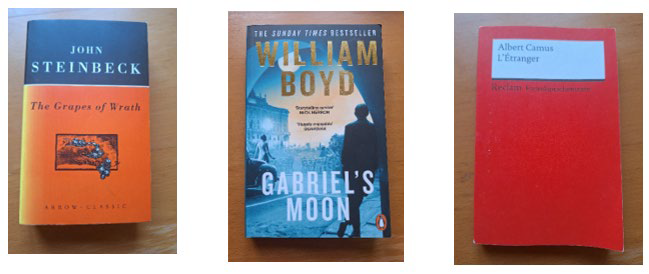
On the topic of nostalgia, reflecting on what I might write here, I realised that many of the books I read at school did serve as an introduction to a range of authors. For example, Steinbeck’s Of Mice and Men led me to read some of his other works, and he is one of my favourite authors – his portrayal of America away from the glitz and glamour has something real, gritty, authentic to it. Albert Camus is another example; I have just started re-reading The Stranger (“L’Étranger”, in its original) – I wouldn’t say this is a ‘light read’, but his prose again has something very ‘earthy’ and honest to it.
I love being recommended books as I find this often results in me reading material that I would probably not otherwise have chosen myself. At the moment, my main source of recommendations in this regard comes from my aunt who is more than happy to pass on novels she has read (she clearly does not suffer from my book hoarding affliction). Her choices tend to relate to more contemporary authors, e.g. Maggie O’Farrell, William Boyd, John Boyne. My next read? Cities of Lies (Ramita Navai), donated to me by my brother this time, which covers life in modern-day Iran; very topical of course.
Mrs Young, Curriculum Lead for Design & Technology
I like reading books that really draw me into the story and make me think about people and their experiences. I especially enjoyed The Beekeeper of Aleppo and Where the Crawdads Sing because they’re emotional, beautifully written, and focus on relationships and resilience. I also enjoy lighter, more humorous novels, particularly books by Jane Fallon, which are easy to read and great for switching off.
Alongside fiction, I like reading non-fiction about health and food, as I’m interested in wellbeing and learning how small lifestyle choices can make a difference. Overall, I enjoy books that are engaging, meaningful, and enjoyable to read.
Mr Justin Kidd, Site Manager (Facilities) at PHSG
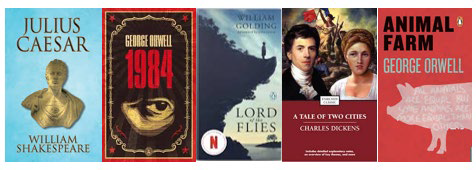
I thought I’d take a trip down memory lane with my bookshelf. Below are books that I studied at school and were part of my English Literature “O level” studies. Just to show my age further, we were the only year group to actually read George Orwell’s 1984 in 1984, which allowed for some interesting comparisons between Orwell’s predictions and what was actually happening!
These are all books that I would never have chosen to read but ended up enjoying reading and studying. A good message to all, not to be afraid of trying something different.
Mrs Heard, School Librarian
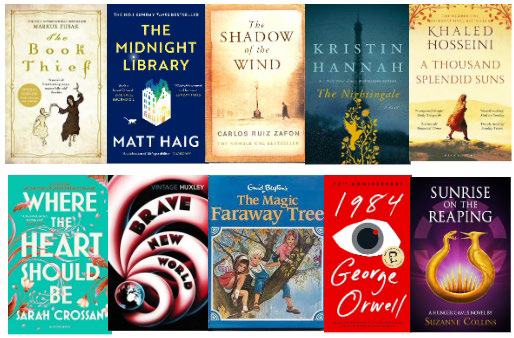
Some of the first books I remember truly falling in love with were The Enchanted Wood, The Magic Faraway Tree and The Folk of the Faraway Tree by Enid Blyton. I adored the characters, the ever-changing worlds at the top of the tree, pop cakes and the slippery-slip. The books are still on my bookshelves – it was a joy to rediscover them years later while reading them to my own children.
Unsurprisingly, I’m drawn to library-themed books! The Book Thief, narrated by Death, is unforgettable for its reminder of the power of words to bring comfort and hope. The Midnight Library really gives you food for thought and explores regret but
also offers a message of hope and acceptance. Another favourite is The Shadow of the Wind by Carlos Ruiz Zafón, set in Barcelona among old bookshops and The Cemetery of Forgotten Books. It’s part adventure, part mystery, part gothic horror. It’s funny, romantic, and magical all at once. A ‘must read.’
I also love historical fiction, particularly anything by Kristin Hannah, whose novels often centre on resilient women facing extraordinary circumstances and Khaled Hosseini- deeply moving storytelling.
At the other end of the spectrum, I have a soft spot for dystopian fiction. 1984 and Brave New World remain favourites for their unsettling questions about society and control. I also love The Hunger Games and all its spin offs.
Finally (difficult to stop if I’m honest!), a recommendation straight from our school library: anything by Sarah Crossan. Where the Heart Should Be is a verse novel set in Ireland during the Great Famine. This one really stayed with me. Heart- wrenching.
Miss Noble, Office Manager
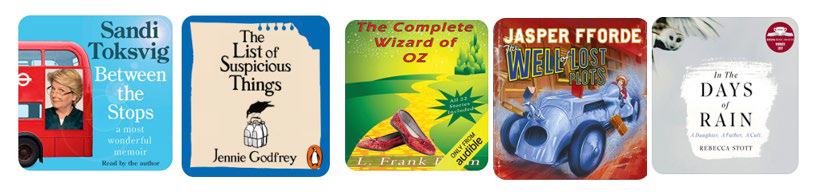
I have a very small physical bookshelf with only a handful of books at home, however I have a vast array of audiobooks. The love of audiobooks started when my children were small, if we had a long journey, we would borrow an audiobook from the library to play in the car en-route; it would often be Doctor Who stories.
I now regularly listen to books when out walking the dog or doing the house work. I enjoy a great mix of books including futuristic sci-fi, detective novels, spy thrillers, romantic 'summer reading', and biographies. My favourite author is Jasper Fforde and the Thursday Next series. If a book grips me, I've been known to listen to the whole book in a day!